- Mar 19
What Wednesdays flowers taught me about burnout
- Matt Tapper
- 0 comments
It’s funny how life drops lessons in your lap when you’re least prepared to learn them. Usually, it’s not some big, cinematic epiphany; it’s just a quiet realization in the middle of a messy Tuesday.
This week was a bit of a disaster. I’ve been stuck working from home, mostly because the rest of the house went down like dominoes with a nasty flu. It’s that heavy, soul-draining kind of illness that turns everyone’s patience paper-thin and makes the simplest tasks feel like climbing a mountain. When you’re in the middle of that, your world shrinks. You stop worrying about the "big picture" and just focus on survival: getting enough fluids into people, finding the thermometer, and hoping you’re the one who stays upright.
Everything else just fades into the background.
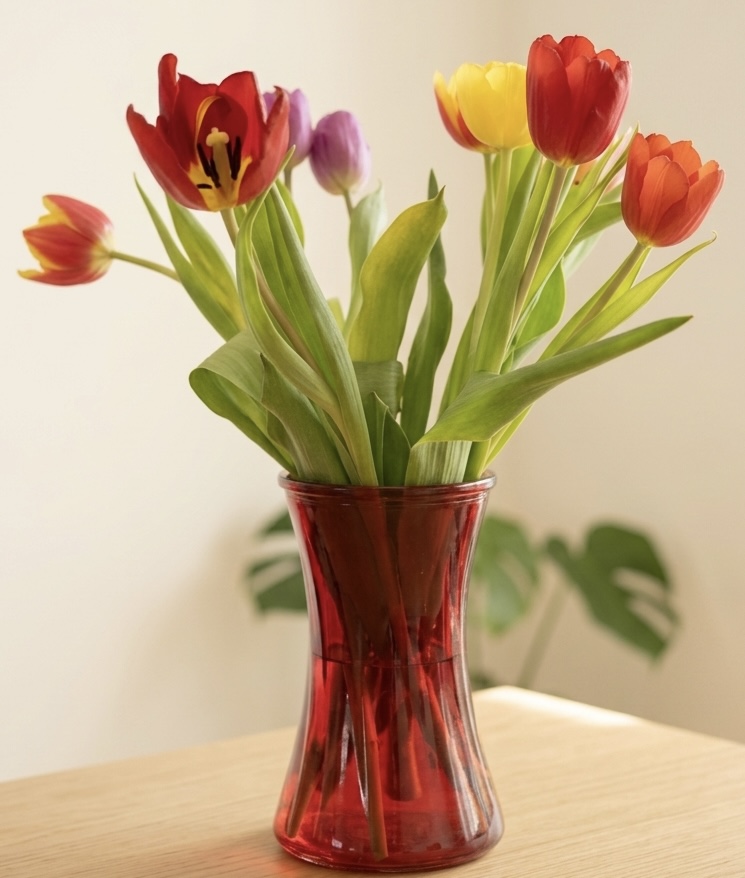
Including the tulips. My wife got a bunch of them last Sunday—bright, vibrant things that really lit up our conservatory. We’d put them there to remind us to slow down, but then Monday hit, and the house turned into a makeshift infirmary. Between the coughing fits and the general exhaustion, those flowers were the last thing on anyone’s mind.
By Wednesday, they looked pathetic. The water was murky, the stems were slumped over the edge of the vase, and the petals were starting to shrivel and brown at the edges. Honestly, they looked like trash. My first instinct was just to toss them and be done with it.
But for some reason, I stopped. I started thinking about how much I felt like those flowers right then—drooping under the weight of a week I hadn’t planned for.
I decided to see if they had any life left in them. It wasn’t a "miracle cure" or anything; I just moved them into the kitchen where it’s a bit cooler and the light is more consistent. I gave the stems a quick trim, swapped the cloudy water for fresh, and then just... left them alone. I didn't hover. I just gave them a different environment.
By the next morning, they were actually standing up. The color came back, the petals unfurled, and they looked—not perfect—but alive again.
It really sat with me. How often do we look at ourselves, or the people we work with, and assume we’re "broken" because we’re struggling? We tell ourselves we’ve lost our spark, or we’re not as capable as we used to be, or we’re just failing at life.
But what if the problem isn’t us? What if we’re just in the wrong room?
Maybe a student isn’t "bad at focusing"—maybe they’re just drowning in a loud, high-pressure classroom. Maybe someone isn’t "lazy"—they’re just overwhelmed because they don't have the right tools to manage the chaos.
We’re a lot more like those tulips than we want to admit. We’re incredibly sensitive to our surroundings. When we’re busy, or in "survival mode," we neglect the basics—rest, proper light, a change of scenery—and then we act surprised when we start to wilt.
Neglect isn't always a choice; sometimes it's just what happens when life pulls you in a dozen different directions at once. But the dip in our energy or confidence doesn't have to be permanent.
Those flowers didn’t need to be thrown out; they just needed to be repositioned.
So, if you’re feeling a bit "off" lately—if you’re tired, scattered, or just not feeling like yourself—maybe stop asking "What’s wrong with me?" and start asking "What needs to change around me?" Sometimes you don't need more discipline or a better "mindset." Sometimes you just need fresh water and a cooler room.