
- Mar 11
When Fear Writes the Script
- Matt Tapper
- 0 comments
I had a student last week, a lovely student who I have been supporting for the majority of this academic year. In this session they were in absolute bits about a birthday event they really wanted to go to in order to support their cousin. But they felt like they couldn’t attend due to personal reasons involving certain family members.
In their mind, they had created a detailed and believable story about how the whole evening would unfold. In this story, certain people would say certain things, tensions would rise, the atmosphere would become uncomfortable, and the entire experience would become something of an interrogation, something they would regret. Because of this imagined version of events, they had already decided it would be safer to avoid the party altogether and instead arrange a small one-to-one catch-up with their cousin another time.
At this point my student was in absolute tears over this story. They felt helpless, low and deeply disappointed that certain people would be in attendance.
So, we began to explore the story together.
We looked at the accuracy of it. Was it a fact, or was it simply a very convincing narrative their mind had constructed? This became quite an interesting conversation because my student was almost completely certain that their prediction was correct. In fact, they spoke about the event as though they had already travelled forward in time and watched it happen. It felt like they had jumped into the TARDIS and returned with a full report on how the evening would go (Davies, 2005).

Of course, none of that had actually happened.
By the end of the session, after a bit of reassurance and some gentle distraction from the story they had created, we revisited the event again. We explored whether it might still be possible to attend, even briefly. I reiterated that their attendance was for their cousin’s sake and no one else’s. If they wanted to go, they were allowed to go. The decision didn’t belong to the imagined story — it belonged to them.
Roll forward a week.
My student went to the party.
And they absolutely loved it.
The story they were 100% convinced about had dissolved into what it always was — make believe. None of the situations they had been petrified of actually happened, and in fact the evening went better than in their own best-case scenario.
Our minds are incredibly good storytellers.
Unfortunately, they often write thrillers when the situation only requires a short, quiet paragraph. The mind tries to protect us by predicting danger and discomfort, but sometimes it does this by projecting entire films that have no grounding in reality. It’s like standing at the edge of a swimming pool imagining the water will be freezing, stormy and impossible to swim in — only to finally step in and realise it’s perfectly calm.
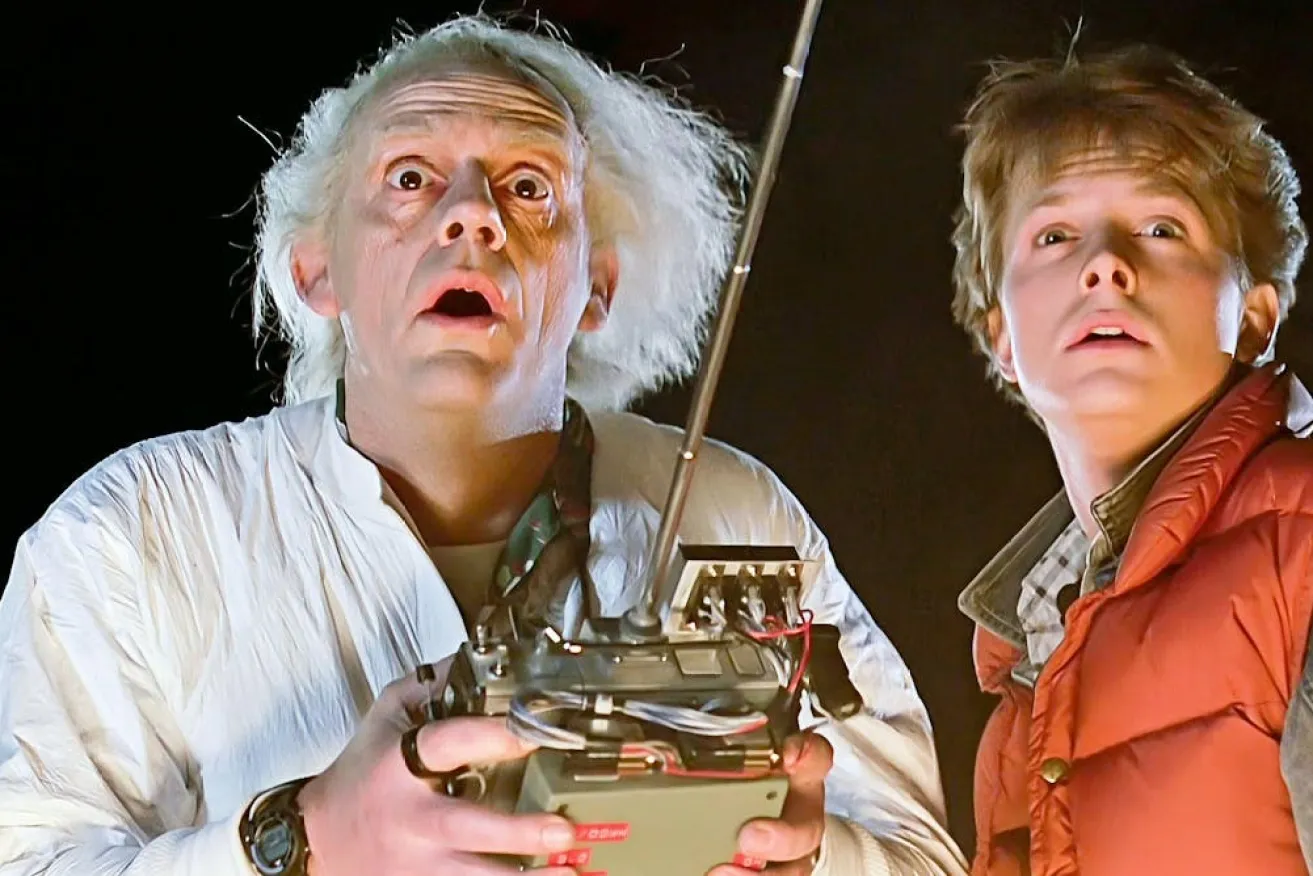
This idea appears in films all the time. Think about Back to the Future (Zemeckis, 1985). The whole story revolves around changing events that haven’t even happened yet. Characters worry about timelines, outcomes, and possible futures, yet most of the tension exists in what might happen rather than what actually does. Our minds do something very similar — they try to write the future before we’ve even lived it.
And because those imagined futures feel vivid, we often talk ourselves out of doing the very things we want to do.
It’s completely normal. Our mind wants to keep us still and safe, and it does this in surprisingly cunning ways. It builds convincing arguments, detailed scenarios and emotional certainty around things that have never actually occurred.
But this is also where progress halts.
Safety isn’t progress. Safety is survival.
And while survival is important, life isn’t meant to be lived purely inside the safety zone our mind constructs. If we always listen to the stories before testing them, we can slowly begin shrinking our world without even realising it.
Sometimes the most powerful thing we can do is gently challenge the story. Not by ignoring it, but by asking a simple question:
"Is this a fact, or is this just the story my mind is telling me right now?"
Because every so often, when we step into the situation we were convinced would go badly, we discover something surprising.
The story wasn’t real.
And the moment we actually lived turned out far better than the one we imagined.
References:
Davies, R.T. (2005) Doctor Who. Television series. London: BBC.
Zemeckis, R. (1985) Back to the Future. Directed by R. Zemeckis. Universal City, CA: Universal Pictures.